Six minutes of night at noon
On 2 August 2027 the Moon’s shadow sweeps across Egypt and the Sun goes out for up to 6 minutes 23 seconds, the longest totality visible from land anywhere on Earth between 1991 and 2114. Over Luxor it happens with the Sun almost directly overhead.
Until totality begins over Luxor
Second contact at Luxor: 13:02:08 EEST · 10:02:08 UTC
Just after one o’clock in the afternoon on Monday 2 August 2027, the sky over Upper Egypt will go dark. Not dusk-dark: properly dark, with stars and planets out, a silver corona hanging overhead where the Sun used to be, and a band of orange twilight running the whole way around the horizon. Then, six minutes later, it will end.
Eclipse chasers have had this date circled for decades, with reason. The Moon’s umbra makes landfall in southern Spain, crosses Gibraltar, Morocco, Algeria, Tunisia and Libya, and reaches its longest and highest point over Egypt before continuing into Saudi Arabia, Yemen and Somalia. The maximum duration (6 minutes 23 seconds) falls on the Nile between Asyut and Sohag, with Luxor just down-track and only three seconds short of it.
Two things make Egypt exceptional rather than merely good. The Sun sits about 80° above the horizon, so nothing on the ground can block it and no hilltop hunting is required. And early August in Upper Egypt is about as close to a guaranteed clear sky as this planet offers. Compare that with the 2026 eclipse over Spain, where totality lasts under two minutes with the Sun skimming the horizon.
The interactive eclipse map
Click anywhere and the map computes what the eclipse looks like from that exact point: how long totality lasts, the contact times to the second, how high the Sun sits and how much of it disappears. Town markers show our JPL DE440 figures; any other point is computed live in your browser.
The best places to watch
Everywhere below is inside the path of totality. The difference between them is minutes, comfort and what you get to stand in front of.
Sohag & Abydos
Almost exactly on the centre line, with the longest totality of any Egyptian city.
Full guide → Total: 6m 20s Nile ValleyLuxor
Ancient Thebes on the centre line: the single best place on Earth to watch this eclipse.
Full guide → Total: 6m 20s Red Sea CoastBerenice
A remote Red Sea outpost that catches a full six minutes of darkness.
Full guide → Total: 6m 17s Western DesertBahariya Oasis
Black Desert dunes, hot springs and more than six minutes of totality.
Full guide → Total: 6m 09s Nile ValleyQena & Dendera
Six minutes of totality above the best-preserved zodiac ceiling in Egypt.
Full guide → Total: 6m 09s Beyond EgyptBenghazi
Over six minutes of totality on the Libyan coast.
Full guide →Why this one is different
Total eclipses are not rare: there is one somewhere on Earth roughly every eighteen months. Eclipses this long, this high in the sky and over ground this reliably clear are rare indeed.
| Eclipse | Max totality | Sun altitude | Where |
|---|---|---|---|
| 2 Aug 2027 | 6m 23s | 80–82° | Upper Egypt |
| 12 Aug 2026 | 1m 48s | 2–12° | Northern Spain |
| 8 Apr 2024 | 4m 28s | ~70° | Mexico & USA |
| 21 Aug 2017 | 2m 40s | ~64° | United States |
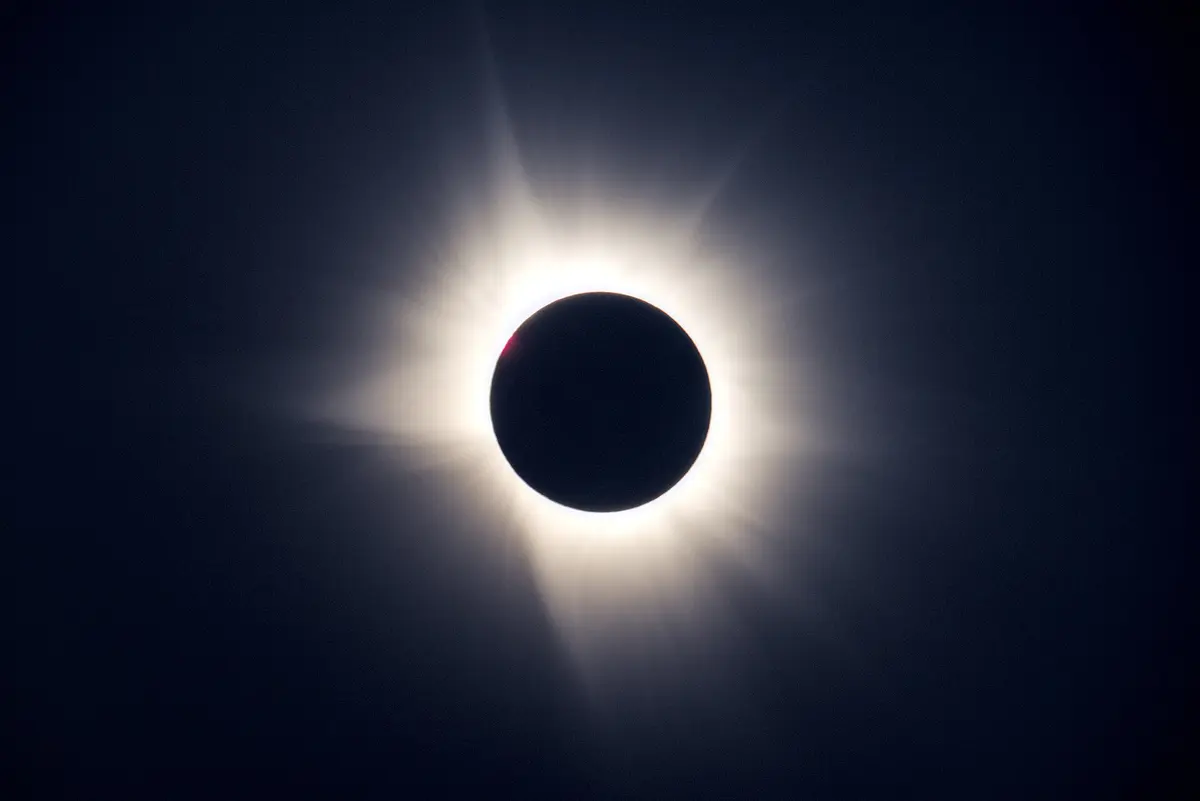
Why make so much of a high Sun? In Spain in 2026 the eclipsed Sun sat a few degrees above the horizon, which meant finding a hilltop with a clean western view and hoping haze stayed away. In Egypt in 2027 you can watch from a hotel roof, a temple forecourt, a boat on the Nile or a patch of open desert, and nothing can get in the way.
The catch is the heat rather than the sky. Totality falls in the early afternoon of the hottest month, in one of the hottest inhabited valleys on Earth: expect 40–43°C in the Nile valley. That is entirely manageable, but only if you plan for it. Read the weather and climate guide →
Before you go
Eye safety
ISO 12312-2 filters for every second of the partial phases, and the one window when it is safe, and necessary, to look with your own eyes.
Read the safety guide →Plan your trip
Choosing a base, getting to Upper Egypt, the trains and internal flights, and why accommodation is the thing to book first.
Start planning →Photography
Six minutes is generous, but a Sun 80° overhead breaks most tripods. Focal lengths, filters, brackets and a rehearsal plan.
Get the settings →Quick answers
What time does the eclipse happen in Egypt?
In Luxor the partial eclipse begins at 11:40, totality runs from 13:02:08 to 13:08:29, and everything is over by 14:26 local time (EEST, UTC+3). Times shift by a few minutes elsewhere on the path. The map gives exact figures for any point.
How long is totality where I am going?
Sohag gets 6m 22s, Luxor 6m 20s, Qena 6m 09s, Marsa Alam 5m 27s, Kom Ombo 3m 42s. Aswan, Hurghada, Cairo and Giza get none: they are outside the path. Compare every location →
Is 99% nearly as good as totality?
No. Until the very last sliver of Sun disappears there is no corona, no stars and no darkness, and you cannot safely remove your eclipse glasses. Aswan sees 99.84% and gets none of the experience, despite sitting only about 15 km from the edge of the path.
Do I need eclipse glasses?
Yes: certified ISO 12312-2 glasses, for the roughly 80 minutes of partial phases before totality and the 78 minutes after. During totality itself, and only then, you take them off. Full eye safety guide →